Hello again,
As Covid-19 vaccination rates approach or cross the 50 per cent threshold in Europe and the United States, governments have begun loosening restrictions and are putting in place roadmaps for a fuller reopening of borders.
The Euro 2020 football championship, held in 11 European cities with thousands of live spectators, is testament to this readiness to embrace a return to normalcy.
But in the Asia-Pacific’s ‘zero-Covid-19’ economies, where daily caseloads are low and vaccination rates are slowly rising, risk aversion continues to reign supreme.
In this edition of SCMP Global Impact, our senior Asia correspondent Bhavan Jaipragas looks into the economic and political consequences as Asia and China reopen to the world.
John Carter
Senior Editor, EconomyAsia sports fans watch large spectator turnout at Euro 2020 tournament with envy
“When’s our turn?”
That has been the envious lament in recent weeks among Asia’s large army of football fans as they stayed up overnight to watch Euro 2020 matches being played before thousands of spectators across Europe.
Some 60,000 people were in attendance at both semi-final games this week, and a similar crowd is expected at Sunday’s finals between England and Italy at London’s Wembley Stadium.
The tournament went ahead with spectators in part because governments in participating nations have become more confident about dealing with Covid-19 as vaccination rates rise.
Many in Asia-Pacific hope they too can soon begin living with the virus as they do with other endemic diseases – with regular testing, tracing and vaccination to reduce risks.
But confounding these hopes is a paradoxical situation in the region.
One on hand, vaccine hesitancy remains relatively high and officials face the arduous task of convincing people to get vaccinated for a virus that many believe may as well not exist.
Then, as vaccination rates rise, regional governments are displaying a risk aversion towards easing restrictions on everyday life and non-essential travel – let alone towards allowing mass gatherings like sports matches.
The spread of the highly transmissible Delta variant of Covid-19 is further complicating matters, giving conservative policymakers more fodder to stick to their guns rather than find ways to coexist with the virus.
Business owners, especially those in the hard-hit food and beverage sector, are especially frustrated with this strict mentality.
Offering some hope is Singapore, where government officials say they are in the midst of drawing up a blueprint for living with endemic Covid-19.
Ministers in the city state have noted that residents are growing increasingly battle weary, and say there is good reason to believe that leisure travel to places like Europe and the United States could resume by the end of the year.
The new strategy could be good news for those hoping to use the twice-postponed air travel bubble between the republic and Hong Kong.
Chief Executive Carrie Lam Cheng Yuet-ngor this week suggested that both sides could require travellers using the bubble to be vaccinated.
As the debate continues over when and how countries should transition towards treating Covid-19 as endemic, attention will undoubtedly be on China’s next moves. Like elsewhere, moving on from a “zero-Covid-19” mindset towards treating the disease as endemic will require political will among Chinese policymakers, experts say.
Christopher Dye, an epidemiology professor at the University of Oxford, in June told the Post that ultimately governments may not have a choice. “Although sealing national borders has been understandable during the acute phase of the pandemic, I doubt that any country can keep out the virus indefinitely; it will be too costly.”
- South China Morning Post, SCMP -
Hello again,
As Covid-19 vaccination rates approach or cross the 50 per cent threshold in Europe and the United States, governments have begun loosening restrictions and are putting in place roadmaps for a fuller reopening of borders.
The Euro 2020 football championship, held in 11 European cities with thousands of live spectators, is testament to this readiness to embrace a return to normalcy.
But in the Asia-Pacific’s ‘zero-Covid-19’ economies, where daily caseloads are low and vaccination rates are slowly rising, risk aversion continues to reign supreme.
In this edition of SCMP Global Impact, our senior Asia correspondent Bhavan Jaipragas looks into the economic and political consequences as Asia and China reopen to the world.
John Carter
Senior Editor, EconomyAsia sports fans watch large spectator turnout at Euro 2020 tournament with envy
“When’s our turn?”
That has been the envious lament in recent weeks among Asia’s large army of football fans as they stayed up overnight to watch Euro 2020 matches being played before thousands of spectators across Europe.
Some 60,000 people were in attendance at both semi-final games this week, and a similar crowd is expected at Sunday’s finals between England and Italy at London’s Wembley Stadium.
The tournament went ahead with spectators in part because governments in participating nations have become more confident about dealing with Covid-19 as vaccination rates rise.
Many in Asia-Pacific hope they too can soon begin living with the virus as they do with other endemic diseases – with regular testing, tracing and vaccination to reduce risks.
But confounding these hopes is a paradoxical situation in the region.
One on hand, vaccine hesitancy remains relatively high and officials face the arduous task of convincing people to get vaccinated for a virus that many believe may as well not exist.
Then, as vaccination rates rise, regional governments are displaying a risk aversion towards easing restrictions on everyday life and non-essential travel – let alone towards allowing mass gatherings like sports matches.
The spread of the highly transmissible Delta variant of Covid-19 is further complicating matters, giving conservative policymakers more fodder to stick to their guns rather than find ways to coexist with the virus.
Business owners, especially those in the hard-hit food and beverage sector, are especially frustrated with this strict mentality.
Offering some hope is Singapore, where government officials say they are in the midst of drawing up a blueprint for living with endemic Covid-19.
Ministers in the city state have noted that residents are growing increasingly battle weary, and say there is good reason to believe that leisure travel to places like Europe and the United States could resume by the end of the year.
The new strategy could be good news for those hoping to use the twice-postponed air travel bubble between the republic and Hong Kong.
Chief Executive Carrie Lam Cheng Yuet-ngor this week suggested that both sides could require travellers using the bubble to be vaccinated.
As the debate continues over when and how countries should transition towards treating Covid-19 as endemic, attention will undoubtedly be on China’s next moves. Like elsewhere, moving on from a “zero-Covid-19” mindset towards treating the disease as endemic will require political will among Chinese policymakers, experts say.
Christopher Dye, an epidemiology professor at the University of Oxford, in June told the Post that ultimately governments may not have a choice. “Although sealing national borders has been understandable during the acute phase of the pandemic, I doubt that any country can keep out the virus indefinitely; it will be too costly.”
|
Was this newsletter forwarded to you? Subscribe here
|

|
|
|
|
|
10 July 2021 |
|
Welcome to the 1,860 newly joined SCMP Global Impact readers who signed up in the past week.
|
|
Hello again,
As Covid-19 vaccination rates approach or cross the 50 per cent threshold in Europe and the United States, governments have begun loosening restrictions and are putting in place roadmaps for a fuller reopening of borders.
The Euro 2020 football championship, held in 11 European cities with thousands of live spectators, is testament to this readiness to embrace a return to normalcy.
But in the Asia-Pacific’s ‘zero-Covid-19’ economies, where daily caseloads are low and vaccination rates are slowly rising, risk aversion continues to reign supreme.
In this edition of SCMP Global Impact, our senior Asia correspondent Bhavan Jaipragas looks into the economic and political consequences as Asia and China reopen to the world.
John Carter
Senior Editor, Economy
Asia sports fans watch large spectator turnout at Euro 2020 tournament with envy
“When’s our turn?”
That has been the envious lament in recent weeks among Asia’s large army of football fans as they stayed up overnight to watch Euro 2020 matches being played before thousands of spectators across Europe.
Some 60,000 people were in attendance at both semi-final games this week, and a similar crowd is expected at Sunday’s finals between England and Italy at London’s Wembley Stadium.
The tournament went ahead with spectators in part because governments in participating nations have become more confident about dealing with Covid-19 as vaccination rates rise.
Many in Asia-Pacific hope they too can soon begin living with the virus as they do with other endemic diseases – with regular testing, tracing and vaccination to reduce risks.
But confounding these hopes is a paradoxical situation in the region.
One on hand, vaccine hesitancy remains relatively high and officials face the arduous task of convincing people to get vaccinated for a virus that many believe may as well not exist.
Then, as vaccination rates rise, regional governments are displaying a risk aversion towards easing restrictions on everyday life and non-essential travel – let alone towards allowing mass gatherings like sports matches.
The spread of the highly transmissible Delta variant of Covid-19 is further complicating matters, giving conservative policymakers more fodder to stick to their guns rather than find ways to coexist with the virus.
Business owners, especially those in the hard-hit food and beverage sector, are especially frustrated with this strict mentality.
Offering some hope is Singapore, where government officials say they are in the midst of drawing up a blueprint for living with endemic Covid-19.
Ministers in the city state have noted that residents are growing increasingly battle weary, and say there is good reason to believe that leisure travel to places like Europe and the United States could resume by the end of the year.
The new strategy could be good news for those hoping to use the twice-postponed air travel bubble between the republic and Hong Kong.
Chief Executive Carrie Lam Cheng Yuet-ngor this week suggested that both sides could require travellers using the bubble to be vaccinated.
As the debate continues over when and how countries should transition towards treating Covid-19 as endemic, attention will undoubtedly be on China’s next moves. Like elsewhere, moving on from a “zero-Covid-19” mindset towards treating the disease as endemic will require political will among Chinese policymakers, experts say.
Christopher Dye, an epidemiology professor at the University of Oxford, in June told the Post that ultimately governments may not have a choice. “Although sealing national borders has been understandable during the acute phase of the pandemic, I doubt that any country can keep out the virus indefinitely; it will be too costly.”
|
|
|
|
|
|

|
|
Open for business? The trouble with bringing down mainland China’s coronavirus travel barriers
|
| • |
The country is racing to vaccinate the public and reach herd immunity to prevent imported cases getting a foothold | | | • | But there is no sign that restrictions will ease for travellers any time soon, diplomats say
|
|
|
This is the first in a series about China’s plans to reopen its borders amid the Covid-19 pandemic. Here, Zhuang Pinghui and Simone McCarthy look into what it will take for China to reopen safely. When the coastal province of Fujian announced at the end of April it would cut the quarantine required for some Taiwanese visitors, authorities hoped the example could test the water. Read more
|
|
|
|

|
|
How can Australia, New Zealand, and Hong Kong return to pre-pandemic life? Vaccines, timetables, and targets
|
| • |
‘Zero-Covid-19’ economies have resisted being drawn on specifics about when to do away with restrictions on everyday life | | | • | But experts say offering people a realistic endpoint will help with mental health and ensure authorities do not shift the goalposts
|
|
|
Australian Prime Minister Scott Morrison pledged borders would stay closed until it was “safe”. New Zealand Prime Minister Jacinda Ardern linked the resumption of international travel to “enough” people getting vaccinated. Hong Kong Chief Executive Carrie Lam Cheng Yuet-ngor said the “coverage of the jabs” would be key to easing border restrictions. Throughout the Covid-19 pandemic, governments have resisted being drawn on specifics when discussing the circumstances for doing away with restrictions on everyday life, preferring to appeal to nebulous concepts such as “safety”. Reticence has been especially pronounced in “zero-Covid-19” economies such as Australia, New Zealand and Hong Kong, all of which have kept a tight lid on caseloads with strict border controls that effectively halted international travel. Read more
|
|
|
|
|

|
|
Coronavirus: how China’s closed borders have hit trade and diplomacy
|
| • |
Chinese traders are feeling the pinch as they try to do everything online, as overseas clients count the cost of shipping delays | | | • | Meanwhile, top-level meetings have been held virtually at a time when Beijing’s relations with major trade partners are worsening
|
|
|
This is the seventh in a series about China’s plans to reopen its borders amid the Covid-19 pandemic. Here, Josephine Ma, Cissy Zhou and Jevans Nyabiage look into how China’s trade and diplomacy have been affected by the lack of face-to-face interactions. Like many countries, virtual meetings have been vitally important for China – the world’s second-largest economy – to keep trade and diplomacy alive after it closed its borders in March last year. Read more
|
|

|

|
|
|

|
|
Coronavirus: vaccines ‘surest way to prevent more deaths’ as global toll hits 4 million
|
| • |
WHO chief says world is at ‘perilous point’ with death toll likely to be underestimated | | | • | Vaccination should be sped up and doses supplied to those who need them, according to health experts
|
|
|
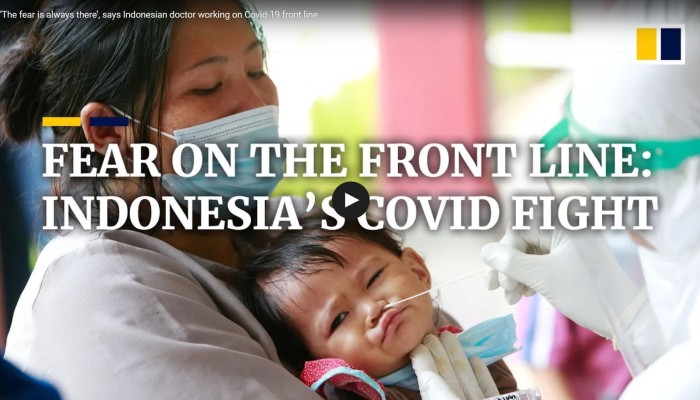
The pandemic has cost Nairobi health care worker Mary Nanjala dearly. Her two sisters, brother and mother were all infected with Covid-19, and two close friends have died of complications from the disease. “One friend was buried last Friday. This has left me very scared as the deaths came too near. We were very close friends,” Nanjala said. “I feel very sad as my friends were young and left behind children.” Read more
|
|
|
To keep track of the latest global news developments, follow our daily coverage on our website, or focus on stories about the coronavirus here and Asia here.
In our next issue, we’ll look at the current state of China’s economy and the outlook for growth ahead.
We welcome your feedback. Email me at globalimpact@scmp.com or tweet me at @jbhavan. Plus, be sure to check out our Asia newsfeed for the latest news and analysis.
All the best,
Bhavan Jaipragas
|

|
|
Bhavan Jaipragas
Asia Correspondent
|
|
|
|
|
|
| SCMP NEWSLETTERS THAT MAY INTEREST YOU |

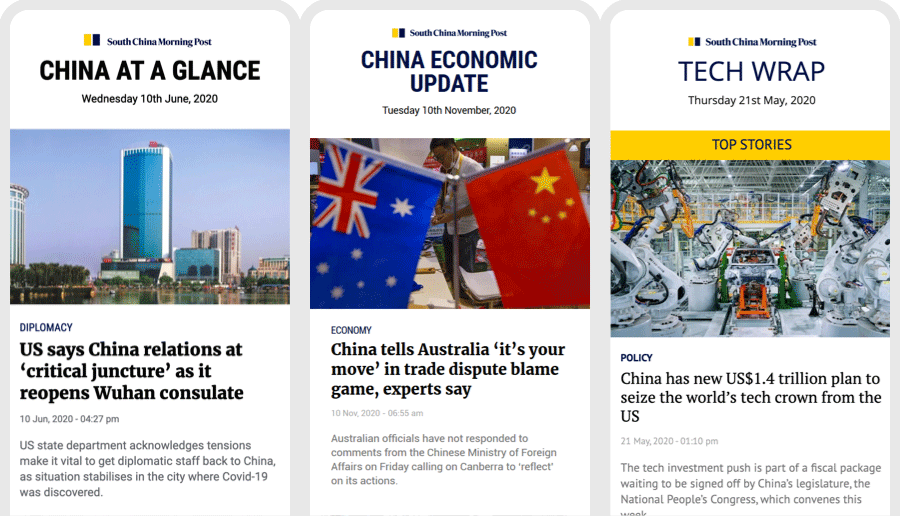
China at a Glance
A wealth of insights giving you the inside story on China every day.
China Economic Update
The latest developments from trade relations to growth rates and other key economic data.
Inside China Tech
Our weekend newsletter covering the biggest stories and updates from the tech centres of China.
VIEW AND SIGN UP
|
|
|
|
Download our app
To get push notifications direct and never miss a story as it breaks
|
|
|
|
|
Hong Kong
China
Asia
World
Economy
Business
Tech
Comment
|
|
|
|
Copyright © 2021 South China Morning Post Publishers Ltd. All rights reserved.
|
|
This newsletter is created and catered for the global news reader. Each issue will feature a news story originating from China that carries a significant macro impact on the rest of the world.
We hope to share with you a broader perspective on the emerging topics shaping our world and that we feel are revolutionising the way we understand China.
|