Hello again, The age of the electric car has started in earnest in China amid heated competition among foreign and domestic brands. In this issue, we explore the current state of and outlook for the huge domestic market as China chases its goal of being carbon neutral by 2060. Peggy Sito Editor Business Desk The race is on: heated competition in China’s surging electric car market. Electric cars, known in China as new energy vehicles (NEVs), will be driving the ambitious growth agenda in the world’s largest automotive market for the next five years. Putting more NEVs on China’s roads fulfil several policy objectives at once: besides stimulating domestic consumption to support the economic recovery, the push for electrification - where one in five vehicles in circulation is an NEV - also contributes to President Xi Jinping’s target of making China carbon neutral by 2060. To promote the switch to electrification, China’s central government and local authorities are providing a slew of tax incentives to encourage carmakers to assemble NEVs, cash subsidies to make NEVs affordable to consumers and policy stimulus to accelerate technological innovation in the sector. The total number of NEVs - inclusive of all-electric vehicles, plug-in hybrids and fuel-cell vehicles - may balloon to 5.42 million units by 2025, from last year’s 1.17 million, according to research by the global market research firm International Data Corporation. NEV sales may jump to 20 per cent of all new car sales by 2025, up to one in every two new cars sold by 2035, from just 5 per cent now, according to a forecast by the China Society of Automotive Engineers (CSAE). Carmakers are already rushing to roll out new designs with ever-further driving range to convince consumers to ditch their internal combustion engines (ICEs) for electric vehicles. Of the 785 new models unveiled in September at the Beijing Auto Show, 160 - or one in every five - was an electric model. The ultimate goal of NEVs is the battery-powered automobile (BEV) with zero emissions at the point of use, also the shared focus of many automotive start-ups, according to The Center for Strategic and International Studies, a Washington-based think tank. Battery-driven cars will make up 95 per cent of NEV sales in 2045, with hybrids making up the rest, the CSAE said. Tesla still holds a strong position in the race for electric vehicle leadership in China with the early introduction of its Model Y this year to a rousing reception. But three of the most exciting start-ups churning out NEVs to challenge Tesla are Chinese companies listed in New York and Nasdaq stock exchanges: NIO and Li Auto both based in Beijing, and Xpeng of Guangzhou. They count some of China’s largest technology behemoths like Alibaba Group Holding and Tencent Holdings as their financial backers. The growth in demand for NEVs is attracting more companies to join the fray. Huawei Technologies, Baidu and Foxconn, and the traditional makers of ICEs such as Volvo Cars’ owner Geely Automobile Holdings, General Motors, Volkswagen and BMW have all unveiled their plans to bring decades of car making experience and the dozens of models at their disposal into the NEV industry. Going forward, they are expected to gain market share in the NEV segment via their Chinese ventures, which will intensify the market domestically when they start their productions in the next couple of years. There is growing speculation that China’s NEV sector is ready to burst onto the global stage and become an export powerhouse. Xpeng sold its first G3 all-electric compact sports utility vehicles in Norway late last year, the foothold in Europe for the Chinese start-up. China’s automotive battery industry, the major cost item for NEVs, is doing even better than the carmakers. Founded in 2011, Contemporary Amperex Technology (CATL) is the world‘s biggest maker of electric vehicle batteries. It went public in Shenzhen in 2018. CATL has become a major supplier to Tesla and has also signed deals to supply batteries to European carmakers. Insufficient charging infrastructure for China’s NEV sector could delay the outbreak of an NEV war between China’s upstart carmakers and the rest of the world. Eventually, the battlefront could move to showrooms around Europe and North America, the Centre for Strategic and International Studies said. - South China Morning Post, SCMP - Hello again, The age of the electric car has started in earnest in China amid heated competition among foreign and domestic brands. In this issue, we explore the current state of and outlook for the huge domestic market as China chases its goal of being carbon neutral by 2060. Peggy Sito Editor Business Desk The race is on: heated competition in China’s surging electric car market. Electric cars, known in China as new energy vehicles (NEVs), will be driving the ambitious growth agenda in the world’s largest automotive market for the next five years. Putting more NEVs on China’s roads fulfil several policy objectives at once: besides stimulating domestic consumption to support the economic recovery, the push for electrification - where one in five vehicles in circulation is an NEV - also contributes to President Xi Jinping’s target of making China carbon neutral by 2060. To promote the switch to electrification, China’s central government and local authorities are providing a slew of tax incentives to encourage carmakers to assemble NEVs, cash subsidies to make NEVs affordable to consumers and policy stimulus to accelerate technological innovation in the sector. The total number of NEVs - inclusive of all-electric vehicles, plug-in hybrids and fuel-cell vehicles - may balloon to 5.42 million units by 2025, from last year’s 1.17 million, according to research by the global market research firm International Data Corporation. NEV sales may jump to 20 per cent of all new car sales by 2025, up to one in every two new cars sold by 2035, from just 5 per cent now, according to a forecast by the China Society of Automotive Engineers (CSAE). Carmakers are already rushing to roll out new designs with ever-further driving range to convince consumers to ditch their internal combustion engines (ICEs) for electric vehicles. Of the 785 new models unveiled in September at the Beijing Auto Show, 160 - or one in every five - was an electric model. The ultimate goal of NEVs is the battery-powered automobile (BEV) with zero emissions at the point of use, also the shared focus of many automotive start-ups, according to The Center for Strategic and International Studies, a Washington-based think tank. Battery-driven cars will make up 95 per cent of NEV sales in 2045, with hybrids making up the rest, the CSAE said. Tesla still holds a strong position in the race for electric vehicle leadership in China with the early introduction of its Model Y this year to a rousing reception. But three of the most exciting start-ups churning out NEVs to challenge Tesla are Chinese companies listed in New York and Nasdaq stock exchanges: NIO and Li Auto both based in Beijing, and Xpeng of Guangzhou. They count some of China’s largest technology behemoths like Alibaba Group Holding and Tencent Holdings as their financial backers. The growth in demand for NEVs is attracting more companies to join the fray. Huawei Technologies, Baidu and Foxconn, and the traditional makers of ICEs such as Volvo Cars’ owner Geely Automobile Holdings, General Motors, Volkswagen and BMW have all unveiled their plans to bring decades of car making experience and the dozens of models at their disposal into the NEV industry. Going forward, they are expected to gain market share in the NEV segment via their Chinese ventures, which will intensify the market domestically when they start their productions in the next couple of years. There is growing speculation that China’s NEV sector is ready to burst onto the global stage and become an export powerhouse. Xpeng sold its first G3 all-electric compact sports utility vehicles in Norway late last year, the foothold in Europe for the Chinese start-up. China’s automotive battery industry, the major cost item for NEVs, is doing even better than the carmakers. Founded in 2011, Contemporary Amperex Technology (CATL) is the world‘s biggest maker of electric vehicle batteries. It went public in Shenzhen in 2018. CATL has become a major supplier to Tesla and has also signed deals to supply batteries to European carmakers. Insufficient charging infrastructure for China’s NEV sector could delay the outbreak of an NEV war between China’s upstart carmakers and the rest of the world. Eventually, the battlefront could move to showrooms around Europe and North America, the Centre for Strategic and International Studies said.
Was this newsletter forwarded to you? Subscribe here
Plug in and drive. The rapid advance of new energy vehicles in China


John Carter

Senior Editor, Political Economy

6 February 2021

Hello again, 

The age of the electric car has started in earnest in China amid heated competition among foreign and domestic brands. In this issue, we explore the current state of and outlook for the huge domestic market as China chases its goal of being carbon neutral by 2060.

Peggy Sito
Editor
Business Desk

The race is on: heated competition in China’s surging electric car market. 

Electric cars, known in China as new energy vehicles (NEVs), will be driving the ambitious growth agenda in the world’s largest automotive market for the next five years.

Putting more NEVs on China’s roads fulfil several policy objectives at once: besides stimulating domestic consumption to support the economic recovery, the push for electrification - where one in five vehicles in circulation is an NEV - also contributes to President Xi Jinping’s target of making China carbon neutral by 2060.

To promote the switch to electrification, China’s central government and local authorities are providing a slew of tax incentives to encourage carmakers to assemble NEVs, cash subsidies to make NEVs affordable to consumers and policy stimulus to accelerate technological innovation in the sector.

The total number of NEVs - inclusive of all-electric vehicles, plug-in hybrids and fuel-cell vehicles - may balloon to 5.42 million units by 2025, from last year’s 1.17 million, according to research by the global market research firm International Data Corporation. 

NEV sales may jump to 20 per cent of all new car sales by 2025, up to one in every two new cars sold by 2035, from just 5 per cent now, according to a forecast by the China Society of Automotive Engineers (CSAE).

Carmakers are already rushing to roll out new designs with ever-further driving range to convince consumers to ditch their internal combustion engines (ICEs) for electric vehicles. Of the 785 new models unveiled in September at the Beijing Auto Show, 160 - or one in every five - was an electric model.

The ultimate goal of NEVs is the battery-powered automobile (BEV) with zero emissions at the point of use, also the shared focus of many automotive start-ups, according to The Center for Strategic and International Studies, a Washington-based think tank.

Battery-driven cars will make up 95 per cent of NEV sales in 2045, with hybrids making up the rest, the CSAE said.

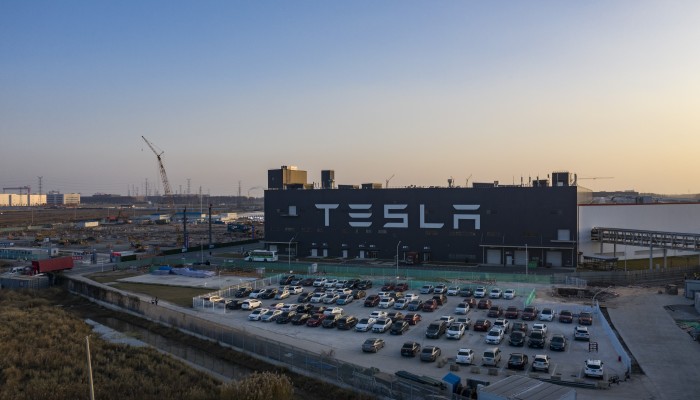
Tesla still holds a strong position in the race for electric vehicle leadership in China with the early introduction of its Model Y this year to a rousing reception. 
But three of the most exciting start-ups churning out NEVs to challenge Tesla are Chinese companies listed in New York and Nasdaq stock exchanges: NIO and Li Auto both based in Beijing, and Xpeng of Guangzhou. 

They count some of China’s largest technology behemoths like Alibaba Group Holding and Tencent Holdings as their financial backers. 
The growth in demand for NEVs is attracting more companies to join the fray. Huawei Technologies, Baidu and Foxconn, and the traditional makers of ICEs such as Volvo Cars’ owner Geely Automobile Holdings, General Motors, Volkswagen and BMW have all unveiled their plans to bring decades of car making experience and the dozens of models at their disposal into the NEV industry.

Going forward, they are expected to gain market share in the NEV segment via their Chinese ventures, which will intensify the market domestically when they start their productions in the next couple of years.

There is growing speculation that China’s NEV sector is ready to burst onto the global stage and become an export powerhouse. Xpeng sold its first G3 all-electric compact sports utility vehicles in Norway late last year, the foothold in Europe for the Chinese start-up.

China’s automotive battery industry, the major cost item for NEVs, is doing even better than the carmakers. Founded in 2011, Contemporary Amperex Technology (CATL) is the world‘s biggest maker of electric vehicle batteries. It went public in Shenzhen in 2018. CATL has become a major supplier to Tesla and has also signed deals to supply batteries to European carmakers.

Insufficient charging infrastructure for China’s NEV sector could delay the outbreak of an NEV war between China’s upstart carmakers and the rest of the world. Eventually, the battlefront could move to showrooms around Europe and North America, the Centre for Strategic and International Studies said.

60 SECOND CATCH-UP
Explainer: In China’s EV war, here’s how tech giants will shake up the world’s biggest auto market
Infographic: The stones in the road for China’s 2025 plan on electric vehicles
DEEP DIVES
China EV battery race: Tesla’s rivals join NIO in efforts to achieve 1,000km driving range on single charge target
NIO was the first to put the 1,000km range on its ET7 sedan specification, to be fitted with a 150kWh solid-state battery when it goes into production in 2022
Chinese partners of General Motors, Toyota and Honda have also announced efforts to develop cutting-edge batteries that can go the distance

China’s electric car assemblers and battery producers are setting a new goalpost in their battle for supremacy in the world’s largest vehicle market: a driving range of up to 1,000 kilometres (621 miles) on a single charge.

Their new weapon is the solid-state battery, deemed a better option because the electricity from solid electrodes and a solid electrolyte is safer, more reliable and more efficient than the liquid or polymer gel electrolytes found in existing lithium-ion or lithium polymer batteries. Read more

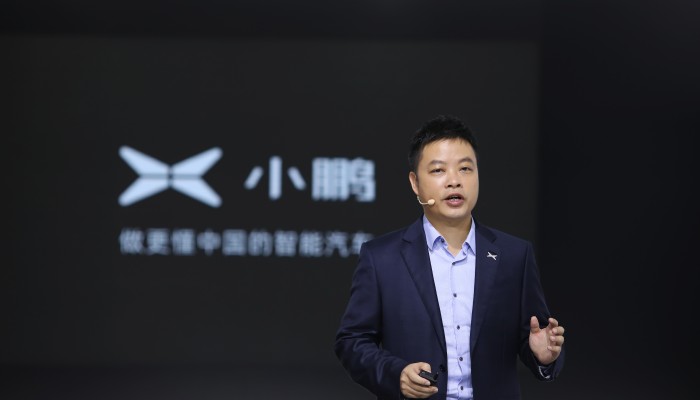
Video: Electric cars and Ping Pong: He Xiaopeng, CEO of Chinese electric car start-up Xpeng, on problem solving
Help us make a global impact
Share this newsletter with friends and colleagues whom you think need to be in the loop, copy & paste your personal referral link:
https://register.scmp.com/newsletter/global-impact/referral/signup/
Apple supplier Foxconn and China’s Geely start EV venture to make cars for others, as sector chases its iPhone moment
Joint venture will produce original equipment such as whole vehicles, parts, intelligent drive systems, etc for global carmakers
Move comes as carmakers chase iPhone-like product that will change the whole segment, analyst says

The world’s largest contract manufacturer of consumer electronics is teaming up with China’s leading carmaker to assemble made-to-order electric cars, using their production prowess and supply chain expertise to help more marques enter the highly competitive market for new-energy vehicles.

The joint venture set up by Taiwan’s Foxconn Technology Group and Hangzhou-based carmaker Zhejiang Geely Holding Group aims to accelerate the transition from traditional cars to electric vehicles (EVs) within the industry. It will produce original equipment such as whole vehicles, parts, intelligent drive systems and automotive ecosystem platforms, among others, for global carmakers, Geely said in a statement on Wednesday. Both companies will hold a 50 per cent stake in the new venture, which does not have a name yet. Read more

Video: Tesla exports first China-made cars to Europe with shipment of 7,000 Model 3 electric sedans
Failed billionaire Jia Yueting’s electric car dream rekindled as Geely and other investors come to the rescue of Faraday Future
Some 30 institutional investors from China, US and Europe are investing US$1 billion in Faraday Future founded by failed Chinese tycoon Jia Yueting
Faraday Future and Property Solutions Acquisition Corp, a special purpose acquisition company, will merge and fund the production of the FF91 electric car

Leading Chinese carmaker Geely and a clutch of state-owned companies from Zhuhai have joined hands to bail out embattled electric vehicle maker Faraday Future (FF), founded by failed Chinese tycoon Jia Yueting.

Some 30 institutional investors from China, US and Europe and a trust are investing US$1 billion in the carmaker, following which FF will be valued at about US$3.4 billion and become a public company. Read more

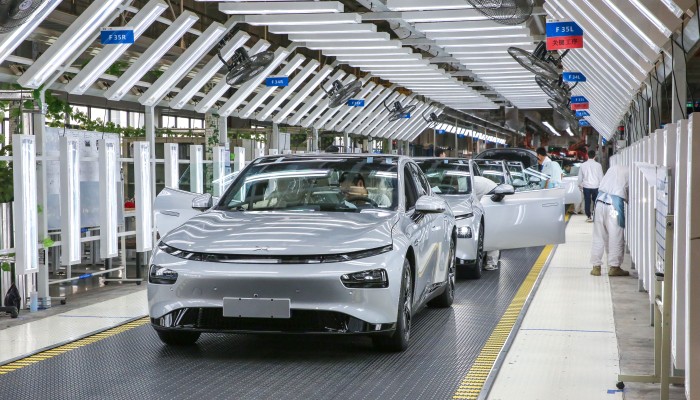
Video: Inside Chinese electric vehicle maker Xpeng's factory in Zhaoqing city
Electric carmakers battle for buyers’ hearts and wallets in rural China
The average budget among car buyers in rural China mostly clustered around 50,000 yuan, according to a May survey by China EV 100
With that budget, they require a driving range of between 100 kilometres and up to 300 kilometres

This is the first of a three-part series on the push for electrification in the world’s largest vehicle market, looking at the challenges of selling so-called new energy vehicles in rural China where manufacturers must balance between performance and price in a market of limited charging infrastructure.

An assembler of cheap compact cars and minivans running on internal combustion engines has emerged as the unlikely victor – at least for the time being – in the vicious battlefield of the world’s largest market for electric vehicles. Read more

To keep track of the latest global news developments, follow our daily coverage on our website, or focus on stories about electric car development here.

We will take a week off for Lunar New Year, but be back with you on February 20, when we dig into China’s rapid economic recovery from the coronavirus pandemic. 
  
We welcome your feedback. Email me at globalimpact@scmp.com or tweet me at @scmpeconomy. Plus, be sure to check out our Economy newsfeed for the latest news and analysis.

All the best,  

John Carter
Senior Editor, Political Economy

John Carter

Senior Editor, Political Economy

SCMP NEWSLETTERS THAT MAY INTEREST YOU

China at a Glance

A wealth of insights giving you the inside story on China every day.

China Economic Update

The latest developments from trade relations to growth rates and other key economic data.

Tech Wrap

The biggest tech news and reviews coming out of China, HK and Asia.

VIEW AND SIGN UP

Download our app

To get push notifications direct and never miss a story as it breaks

Hong Kong China Asia World Economy Business Tech Comment


Copyright © 2021 South China Morning Post Publishers Ltd. All rights reserved.

This newsletter is created and catered for the global news reader. Each issue will feature a news story originating from China that carries a significant macro impact on the rest of the world.

We hope to share with you a broader perspective on the emerging topics shaping our world and that we feel are revolutionising the way we understand China.