|
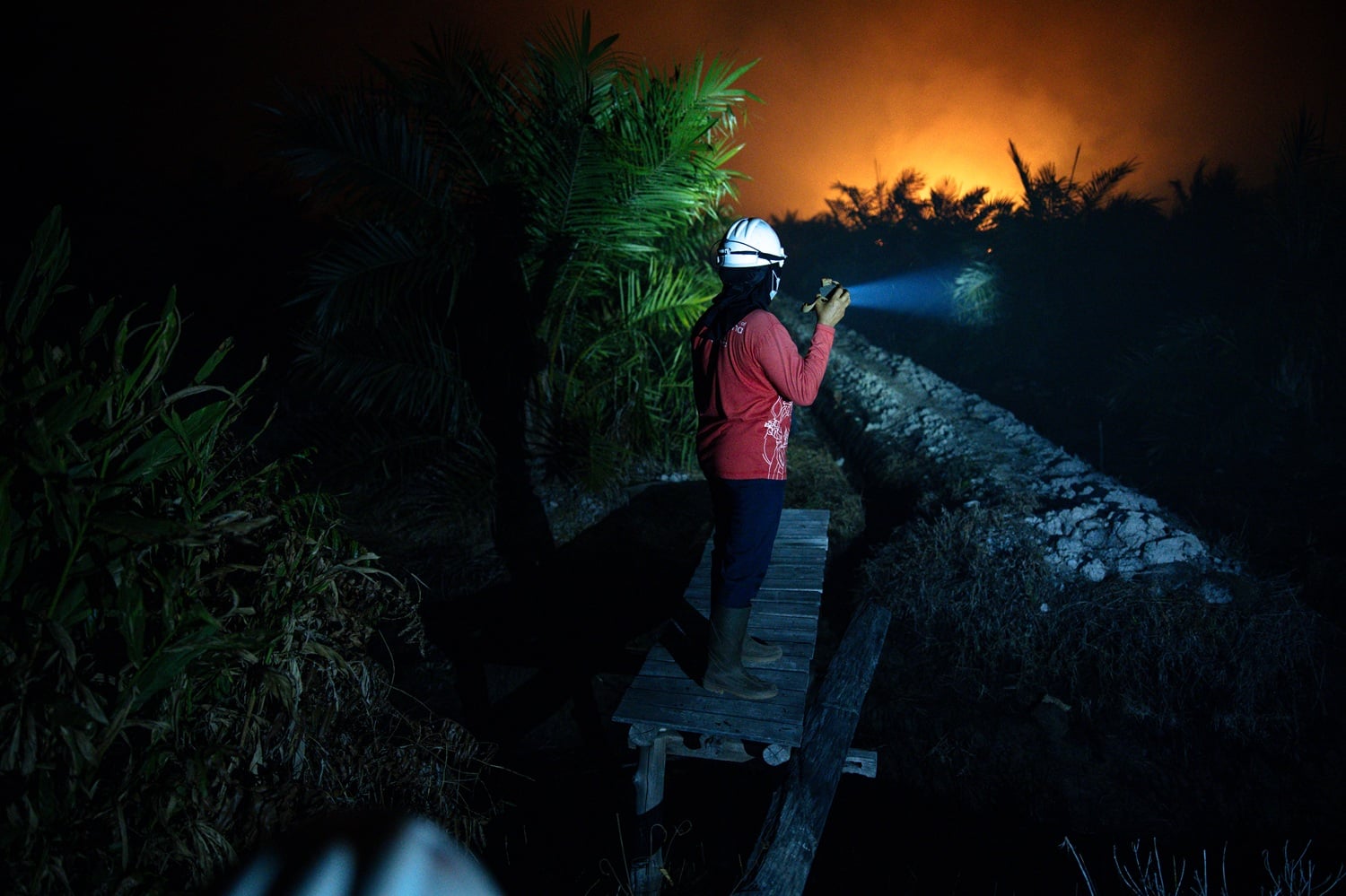
Irma smells the fire before she sees it: a column of thick, yellow-tinged smoke rising above the tree line near her small wooden home.
She pulls on heavy rubber boots, checks her equipment and drives straight into the impenetrable smog emanating from wildfires devouring the peatland and ancient forests of Borneo.
“I am terrified that the flames will reach residential areas. It is extremely dangerous,” the 39-year-old mother said, moments before disappearing into the murk that has settled over the Indonesian province of West Kalimantan.
Irma, who like many Indonesians only goes by one name, is one of roughly 150 Muslim women who make up Power of Mama, an all-female volunteer firefighting unit that heads out every day during the dry season to battle blazes smouldering deep beneath the island’s peatlands. They fight fires lit, deliberately or otherwise, by the agricultural burning of poor farming communities clearing land the cheapest way they know.
This year, those fires arrived earlier and burned harder than most can remember, fuelling climate anomalies and drought conditions.
“We are the ones who feel its effects most,” said Irma, who is the group’s coordinator, explaining that it was women who were left to care for housebound children through increasingly long stretches of the year.
Indonesia has an estimated 206,000 square km (79,500 square miles) of tropical peatland, making up about 10.8 per cent of its total land area and the most carbon-dense store of its kind anywhere on Earth. When the peatlands burn, they release thousands of tonnes of greenhouse gases into the air, fuelling a vicious cycle that drives global warming and worsens each year’s drought.
Decades of deforestation and drainage for palm oil plantations and other intensive agriculture have helped create a wildlife crisis that each year consumes vast tracts of the country, destroying the last natural habitat of some of the world’s rarest species, from orangutans and hornbills to pangolins.
Wearing hard hats or motorcycle helmets over their jilbabs, the Power of Mama volunteers haul long hosepipes into singed forest and fields, their bright red uniforms the only splash of colour against the scorched earth.
The group was formed in 2022 by Yayasan Inisiasi Alam Rehabilitasi Indonesia (YIARI), the local affiliate of global non-profit International Animal Rescue. Translating as Indonesian Nature Rehabilitation Initiatives Foundation, YIARI operates with a mandate that extends well beyond firefighting.
“This isn’t just about putting out fires,” YIARI founder and CEO Karmele Llano Sanchez said. “It’s about seeing these women become more confident and taking their rightful, powerful role in society.”
Signing off,
Garry Lotulung
Photojournalist
Got an issue you’d like us to cover? Send us a tip at lunar@scmp.com or drop us a line on Facebook. Follow more news on women and gender here.
|